Impact of Digital Marketing on Consumer Behaviour: Role of Social Media & Buying Decisions

Impact of digital marketing on consumer behaviour

Over the past decade, the way people discover, evaluate, and purchase products has changed dramatically. Traditional billboards and TV ads still exist, but the real action has moved online. Today, a single Instagram reel or a five-star Amazon review can influence thousands of buyers within hours.

Understanding this shift is no longer optional for businesses; it is essential. Let us break down exactly how digital marketing shapes consumer decisions, with social media sitting right at the centre of it all.

5.66 B+

Active social media users worldwide in 2024

76%

Consumers who bought a product after seeing it on social media

54%

Users research products on social platforms before purchasing

How Digital Marketing Has Changed the Way We Buy

Social media marketing impact on buying behaviour

Before the internet, buying something meant walking into a store and trusting the salesperson. Today, consumers do their own research, often extensively, before spending a single rupee or dollar. This is a fundamental shift in the buyer-brand relationship.

Digital marketing consumer behaviour research consistently shows that modern buyers are more informed, more sceptical, and more influenced by peer opinions than ever before. As of 2024, there are over 5.4 billion internet users worldwide, representing roughly 67% of the global population. A significant portion of that activity directly involves product discovery and purchase research.

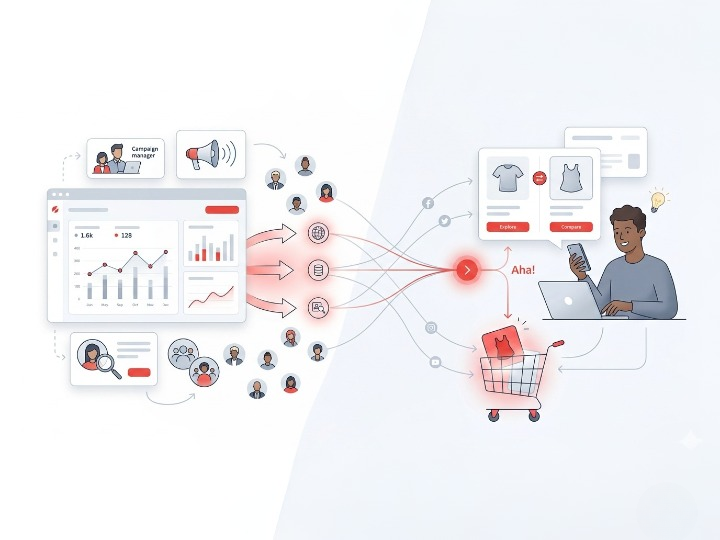
Digital channels, search engines, email, social media, and content marketing each play a role. But social media has emerged as the most emotionally resonant of them all. The shift has completely changed how brands communicate with customers. Instead of one-way advertising, businesses now engage in two-way conversations, building trust through content, reviews, and social proof.

The Shift from Passive to Active Consumers

Traditional advertising pushed messages to passive audiences. Digital marketing flipped that model. Consumers now actively seek information, compare options, read reviews, and engage with brands on their own terms.

This makes every touchpoint a product page, a tweet, or a YouTube tutorial—any of which can become a potential turning point in the purchase journey.
The Impact of Social Media Marketing on Consumer Buying Behaviour

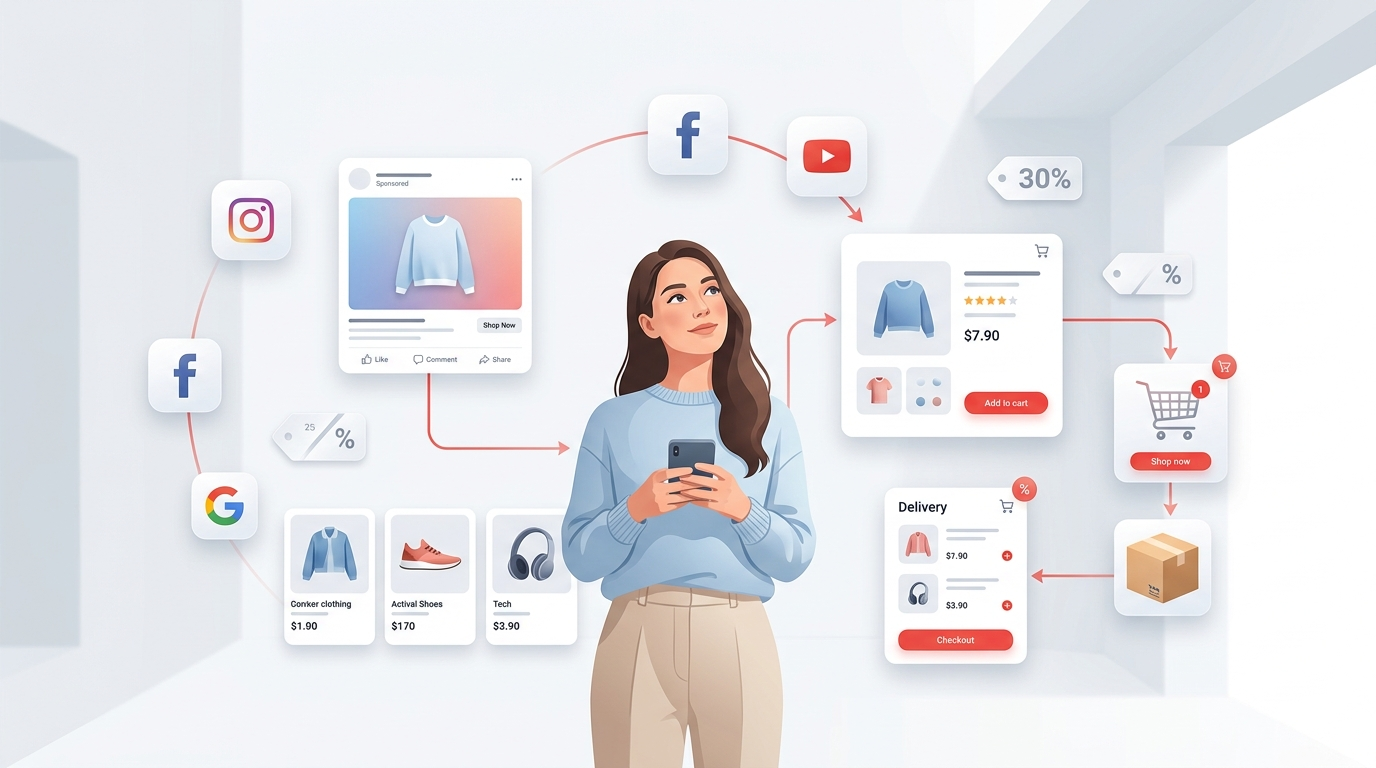
If digital marketing is the engine, social media is the fuel. Platforms like Instagram, YouTube, Facebook, and LinkedIn are not just entertainment hubs; they are powerful purchase influencers. A well-executed social media marketing strategy can move a consumer from discovery to purchase faster than any traditional channel.

The impact of social media marketing on consumer buying behaviour operates through several mechanisms:

Influencer Marketing

When a trusted creator recommends a product, audiences listen. Influencer marketing works because it mimics word-of-mouth, the oldest and most effective form of marketing. A micro-influencer with 50,000 engaged followers often drives more conversions than a celebrity endorsement that reaches millions but feels impersonal.

The influencer marketing industry was valued at $21.1 billion in 2023, up from just $1.7 billion in 2016, underscoring how central creator-led content has become to brand strategy.

According to HubSpot's State of Marketing Report, 30% of marketers say influencer marketing delivers a higher return on investment than any other channel they use, making it one of the most cost-effective strategies in the digital toolkit.

User-Generated Content and Reviews

Before making a purchase, most consumers check reviews. Social proof in the form of comments, tagged photos, unboxing videos, and ratings has become a primary decision-making tool. Research by PowerReviews found that 99.9% of consumers read reviews when shopping online at least sometimes, and 96% actively look for negative reviews to get a balanced perspective.

A product with 4.7 stars and 2,000 reviews simply feels safer than one with a polished ad and no social validation. Brands that encourage customers to share experiences online are, in effect, building a self-sustaining marketing machine.

Targeted Advertising

Perhaps the most technically impressive aspect of social media's impact on marketing is precision targeting. Platforms like Meta and Google allow advertisers to reach users based on age, location, interests, browsing history, and even life events.

Global digital advertising spend reached $601 billion in 2023 and is projected to surpass $870 billion by 2027, a clear signal that brands are doubling down on data-driven targeting. This means a 58-year-old fitness enthusiast in Pune sees a protein supplement ad while someone searching for baby products sees something entirely different. Relevance drives results, and results drive sales.

FOMO and Emotional Triggers

Flash sales. Limited-time offers. "Only 3 left in stock." Social media is expertly designed to trigger urgency and fear of missing out (FOMO). A study published in the Journal of Consumer Research found that scarcity messaging and time-limited framing significantly increase purchase intention by activating loss-aversion tendencies in buyers.

These emotional cues are not accidental; they are baked into marketing strategy and deeply influence impulse buying behaviour.

The Benefits and the Honest Challenges

Digital marketing empowers both businesses and consumers. Brands reach wider, more relevant audiences at a fraction of traditional advertising costs. Consumers, meanwhile, gain access to more information and more choices than ever before.

But it is not all smooth scrolling. There are genuine challenges worth acknowledging:

Information overload is real. A Nielsen Norman Group study found that users are bombarded with an estimated 4,000–10,000 brand messages per day, causing selective attention and increasing resistance to generic advertising.

Trust erosion is another concern. Fake reviews, misleading influencer promotions, and data privacy issues have made modern buyers more cautious. Proactive online reputation management helps brands stay ahead of this problem before it becomes a crisis.

And then there is the algorithmic bubble. When social platforms only show consumers what they already like, it can limit exposure to new products and make search engine optimisation (SEO) an essential complementary strategy to ensure organic discovery beyond social feeds.

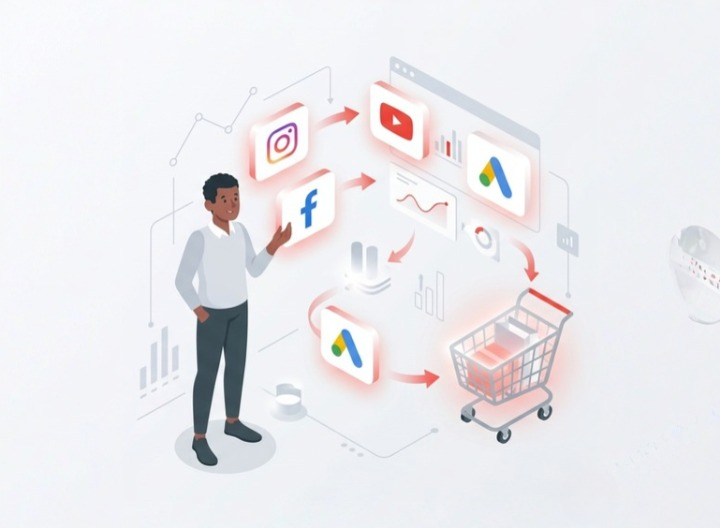
Digital marketing funnel affecting purchase behaviour

Ready to build a data-driven digital strategy that converts? Brand Make specialises in ROI-driven growth for businesses in Pune and beyond.

Get a Free Proposal

Final Thoughts

"The impact of digital marketing on consumer behaviour is not a trend; it is the new baseline. Social media has made marketing more personal, more immediate, and more measurable than at any point in history. For consumers, it means more power to research and choose. For brands, it means greater opportunity but also greater accountability. Whether you need social media marketing, paid search campaigns, or a full-scale SEO strategy, the goal remains the same: build trust, stay visible, and make every rupee of marketing spend count."

Frequently Asked Questions

What is the impact of digital marketing on consumer behaviour? +
Digital marketing has shifted consumers from passive receivers to active researchers. Today's buyers compare prices, read reviews, watch product videos, and seek social proof before purchasing. It has made consumer decision-making faster, more informed, and heavily influenced by online content and peer opinions.
How does social media influence consumer buying decisions? +
Social media influences buying through four key mechanisms: influencer recommendations that build trust, user-generated content and reviews that provide social proof, targeted ads that reach the right audience at the right moment, and FOMO-driven triggers like limited-time offers that push people to act quickly.
Which digital marketing channel has the highest ROI? +
It depends on the business, but SEO and social media marketing consistently rank among the highest ROI channels for long-term brand growth. HubSpot data shows 30% of marketers rate influencer marketing as their top-performing channel, while SEM delivers strong results for immediate, intent-based conversions.
What is Online Reputation Management and why does it matter? +
Online Reputation Management (ORM) is the practice of monitoring, influencing, and improving how your brand appears online — across Google, social media, review platforms, and news results. It matters because 96% of consumers check reviews before buying. One unmanaged negative story or a cluster of bad reviews can directly cost you sales and long-term brand trust.